

Meta Descriptio
Managing synthetic leather lead time and seasonal material procurement effectively requires precise operational mapping across factory processing stages-including extrusion, calendering, embossing, and dyeing. Implementing structured buffer stock strategies, rapid-dispatch swatch workflows, and collaborative forecasting models prevents critical supply chain bottlenecks during peak manufacturing quarters.
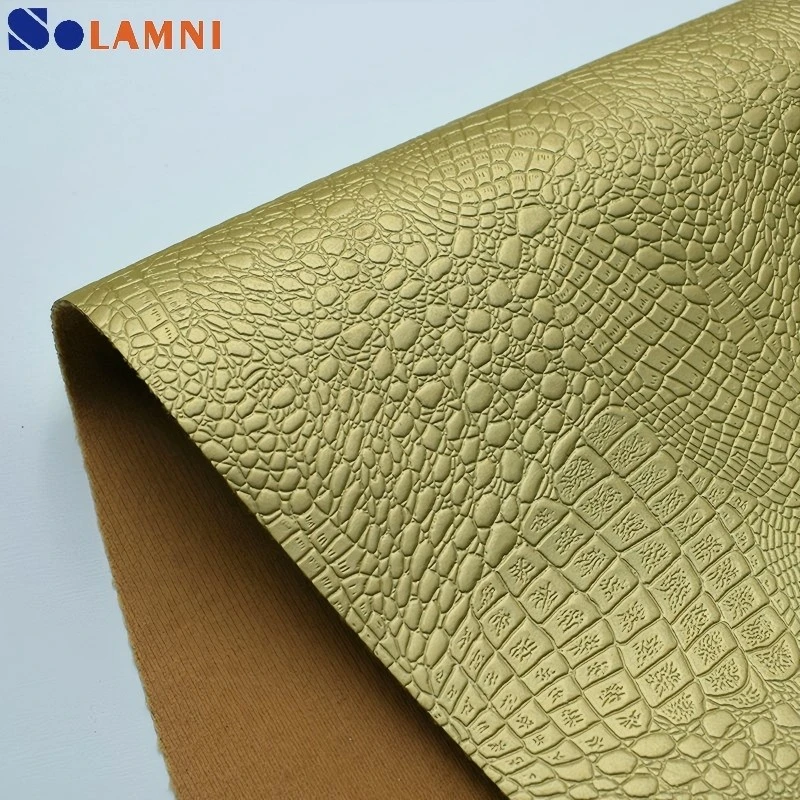
Technical Performance Matrix: Lead Time & Sourcing Metrics
| Procurement Variable | Custom Factory Production Run | Seasonal Peak Production | Strategic Buffer Stock | Verification & Benchmark Standard |
|---|---|---|---|---|
| Lab Dip & Sample Approval | 3 – 5 Business Days | 5 – 7 Business Days | Immediate (24 – 48 Hours) | ISO 105‑J03 (ΔE < 0.3) |
| Mass Production Lead Time | 10 – 15 Business Days | 18 – 25 Business Days | < 48 Hours Fulfillment | Automated Mill Tracking |
| Minimum Order Quantity (MOQ) | 500 m per line item | 1,000 m per line item | 1 Roll (~30 m – 50 m) | Sourcing Flexibility Index |
| Abrasion & Tensile Performance | In‑Line Batch Testing | In‑Line Batch Testing | Certified Pre‑Inspected Stock | Martindale > 100,000 Cycles |
| Chemical Compliance | SVHC Verified Batch | SVHC Verified Batch | Pre‑Certified Hub Stock | REACH / RoHS / SGS Certified |
| Internal Resource Direct Links | Infrastructure: /about-us | Engineering Desk: /custom-service | Stock Product Catalog | - |
💡 Sourcing Tip for Bulk Buyers: Preparing for upcoming seasonal surges or looking to streamline prototyping approvals? Review our factory technical infrastructure on our /about-us page or connect directly with our engineering team via /custom-service to lock in machine capacity, request physical sample swatchbooks, or establish pre-allocated buffer stock.
Technical Principles of Lead Time Management
-
Extrusion & Substrate Prep (2 – 3 Days): Non-woven microfiber, woven, or knitted textile backings are conditioned for polymer coating adhesion.
-
Calendering & Layer Bonding (3 – 4 Days): Polyurethane (PU) or Polyvinyl Chloride (PVC) resins are applied under calibrated thermal and pressure conditions (160°C – 200°C).
-
Embossing & Surface Conditioning (2 – 3 Days): Heated grain rollers apply specified textures (e.g., nappa, pebble, micro-perforated), followed by protective topcoats.
-
Dyeing, Quality Inspection & Packaging (3 – 5 Days): Batch spectrophotometry verifies color accuracy before Martindale abrasion (> 100,000 cycles) and SGS compliance verification.

-
Spectrophotometric Color Mapping: ISO 105-J03 color auditing ensures strict consistency (ΔE < 0.3) across production re-orders.
-
Mechanical Durability Testing: ISO 20344 / Martindale abrasion testing guarantees performance past 100,000 cycles.
-
Global Chemical Compliance: Continuous batch screening verifies complete adherence to REACH, RoHS, and CAL 117 flammability specifications.
🛠️ Factory Assistance
Need to request certified SGS test documentation, lock in rolling forecast allocations, or receive accelerated sample swatches? Our technical team dispatches free sample swatchbooks within 24 to 48 hours. Contact Direct Factory Engineering Today to secure your material timeline.
FAQ

Q1: What is the average factory lead time for custom synthetic leather orders?
A1: Standard custom production lead times run between 10 to 15 business days following sample approval. Peak seasonal manufacturing can extend production timelines to 18 to 25 business days.
Q2: How quickly can sample swatches be delivered for evaluation?
A2: In-stock catalog samples dispatch within 24 to 48 hours. Custom lab dips and color-matched embossed swatches are produced and shipped within 3 to 5 business days.
Q3: What is the Minimum Order Quantity (MOQ) for custom runs versus buffer stock?
A3: Custom factory production requires an MOQ of 500 linear meters per color/grain. Pre-allocated buffer stock or catalog styles require an MOQ of 1 roll (~30 to 50 linear meters).

One-stop shoe material Factory in China
Require immediate engineering consultation or custom specification development for upcoming footwear material programs? Contact our technical sales engineering team directly at ace01@eurus-cn.com or call +86 13459576329 for 24/7 technical support, physical swatchbooks, and direct factory quotation matrices.