


One-stop Footwear Material Supplier in China
Submit your inquiry for PU leather and footwear materials through https://www.solamninewmaterial.com/. Discover how our materials can transform your business and brand. Our high-quality material solutions help you upgrade your footwear items, attract target buyers, and seize more opportunities for growth in the footwear sector.

Learn how to select TPU film for shoe air cushions, focusing on air retention, RF welding strength, fatigue resistance, and technical specifications.
Sourcing TPU Film for Inflatable Airbags and Shoe Air Soles
TPU film for shoe air cushions is used to manufacture inflatable chambers that provide cushioning and support in athletic footwear. The right film must balance air retention, weldability, flexibility, and resistance to repeated compression. Shoe brands and component manufacturers should evaluate the complete welded chamber-not just the film's thickness or tensile strength-before approving a material for mass production.

1. Cushioning Chambers in Modern Athletic Shoes
Inflatable air chambers are designed to absorb and distribute impact during walking, running, and other athletic activities. Depending on the shoe design, chambers may be positioned in the heel, forefoot, or full-length midsole.
TPU film is suitable for selected inflatable structures because it combines flexibility with thermoplastic processing characteristics.
Common air-cushion constructions |
||||||||||||||||||
Film selection must account for forming, welding, inflation, and the mechanical loads experienced during footwear use. |
2. Solvent Dipping Sheets: Health Hazards and Waste
Air retention is a primary requirement for inflatable shoe components. A chamber may initially hold pressure but gradually lose air through material permeation, seam leakage, or localized damage.
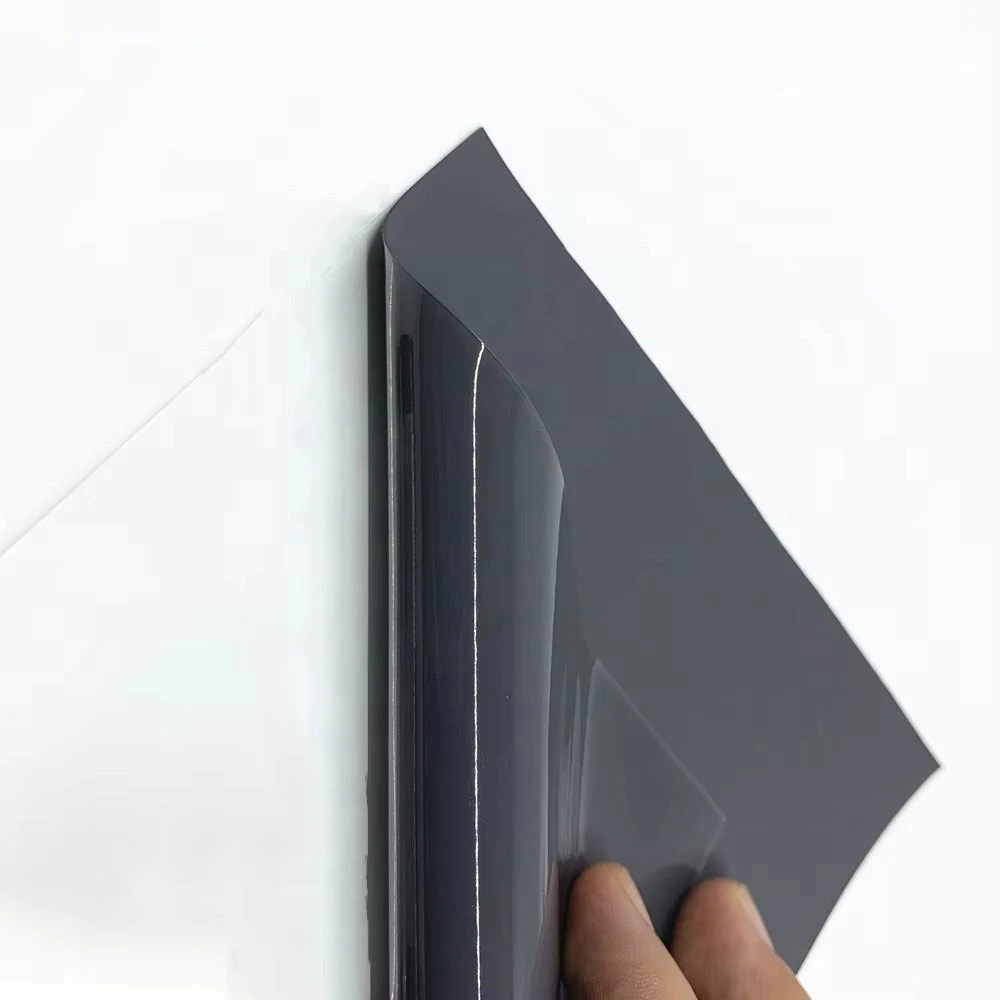
TPU film provides a flexible barrier, but its gas permeability varies according to polymer chemistry, formulation, thickness, temperature, and test conditions.
Key evaluation parameters |
|||||||||||||||||||||
A low gas transmission rate does not guarantee a leak-free air unit. Pinholes, weld defects, and stress concentrations can cause pressure loss even when the film itself has suitable barrier properties. |

3. High-Frequency Welded Seam Strength Testing
High-frequency (HF) welding, also called radio-frequency (RF) welding, can join compatible thermoplastic materials by generating heat within the material under an electromagnetic field.
TPU film grades differ in their dielectric response. Not every TPU film is automatically suitable for HF welding, so buyers should confirm weld compatibility with the specific grade and production equipment.
Important welding variables |
||||||||||||||||||
|
||||||||||||||||||
Recommended seam testing |
||||||||||||||||||
For inflatable footwear components, test both straight seams and complex seam intersections. Corners, curved sections, and transitions between welded and non-welded areas may experience higher stress concentrations. |
4. Fatigue Resistance Under Repeated Cyclic Loading
Shoe air cushions experience repeated compression and deformation throughout their service life. The film and welded seams must tolerate these cycles without cracking, delaminating, or developing leaks.
Fatigue resistance depends on the complete chamber construction, including film thickness, chamber shape, internal pressure, seam geometry, and the distribution of external loads.
Key fatigue-related failure modes
- Film cracking: Repeated deformation can initiate cracks in high-stress areas.
- Seam separation: Insufficient or inconsistent welding can lead to progressive joint failure.
- Permanent deformation: The chamber may lose its intended shape after repeated loading.
- Pressure loss: Small leaks or material permeation can reduce internal pressure.
- Localized thinning: Stretching during forming can create weak sections.
A practical development programme should include
- Establish a reference chamber with the intended geometry and inflation pressure.
- Apply controlled cyclic compression under defined loading conditions.
- Monitor chamber height and pressure during testing.
- Inspect welded seams and high-strain areas at defined intervals.
- Repeat leakage and pressure-retention tests after cycling.
There is no universal cycle count that guarantees footwear service life. Shoe brands should establish acceptance criteria based on the intended application, product category, and internal durability requirements.

5. Technical Spec Sheets for Shoe Brand Engineers
A complete TPU film specification helps footwear engineers compare materials and maintain consistency between development samples and production batches.
|
The following parameters are useful when preparing a sourcing specification. |
||
| Specification | Information to request | Engineering purpose |
|---|---|---|
| Polymer type | TPU grade and chemistry | Material identification |
| Thickness | Nominal value and tolerance | Structural design |
| Width | Available roll width | Production compatibility |
| Hardness | Shore hardness and test conditions | Flexibility assessment |
| Tensile strength | Test method and result | Mechanical strength |
| Elongation | Elongation at break | Deformation capacity |
| Gas permeability | Gas type, test conditions, and result | Air-retention assessment |
| HF weldability | Confirmed welding compatibility | Seam development |
| Peel strength | Test method and specimen construction | Weld performance |
| Cold flexibility | Minimum tested temperature and method | Cold-weather use |
| Ageing resistance | Conditioning method and results | Durability assessment |
|
Engineers should also request sample rolls for forming and welding trials. Material data sheets provide useful screening information, but the final approval should be based on the actual inflatable chamber construction. |
||
💡 Sourcing Tip for Bulk Buyers
For material development and specification discussions, explore Solamni TPU Film.
FAQ

Q1: Why is TPU film used for shoe air cushions?
A1:TPU film combines flexibility, mechanical strength, and thermoplastic processing characteristics, making suitable grades useful for inflatable footwear chambers.
Q2:Can all TPU films be high-frequency welded?
A2:No. HF welding performance depends on the TPU formulation and dielectric response. Confirm compatibility and establish welding conditions through production-representative trials.
Q3: How do manufacturers test the durability of TPU air cushions?
A3:They can combine gas leakage, pressure-retention, welded seam strength, and cyclic compression tests. Testing should use the actual chamber design and defined loading conditions.
One-stop shoe material Factory in China
Require immediate engineering consultation or custom specification development for upcoming footwear material programs? Contact our technical sales engineering team directly at ace01@eurus-cn.com or call +86 13459576329 for 24/7 technical support, physical swatchbooks, and direct factory quotation matrices.